Dispatch From Delaney Hall
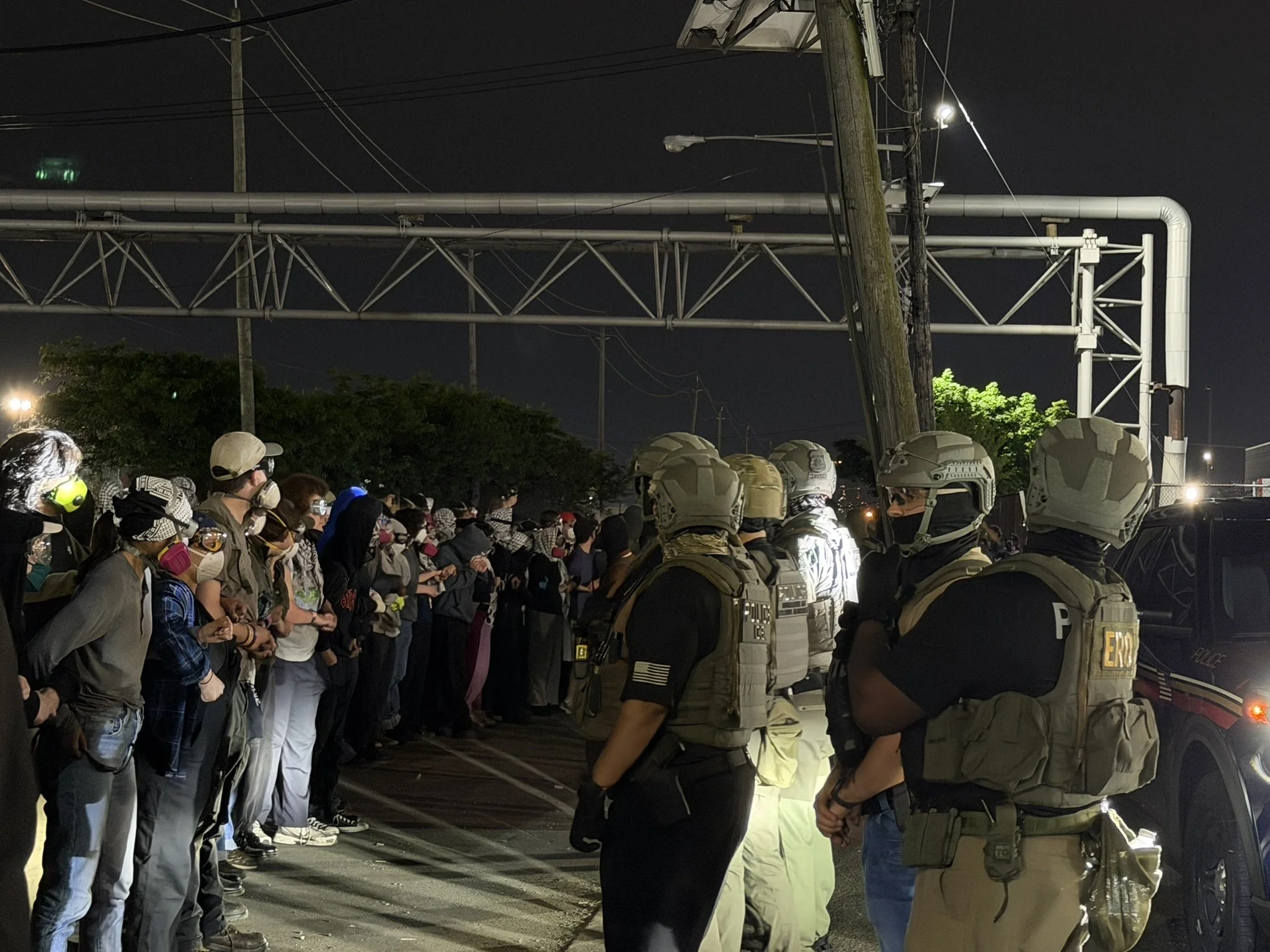
A photographer shook his head and said, “You’re brave for not wearing a mask.”
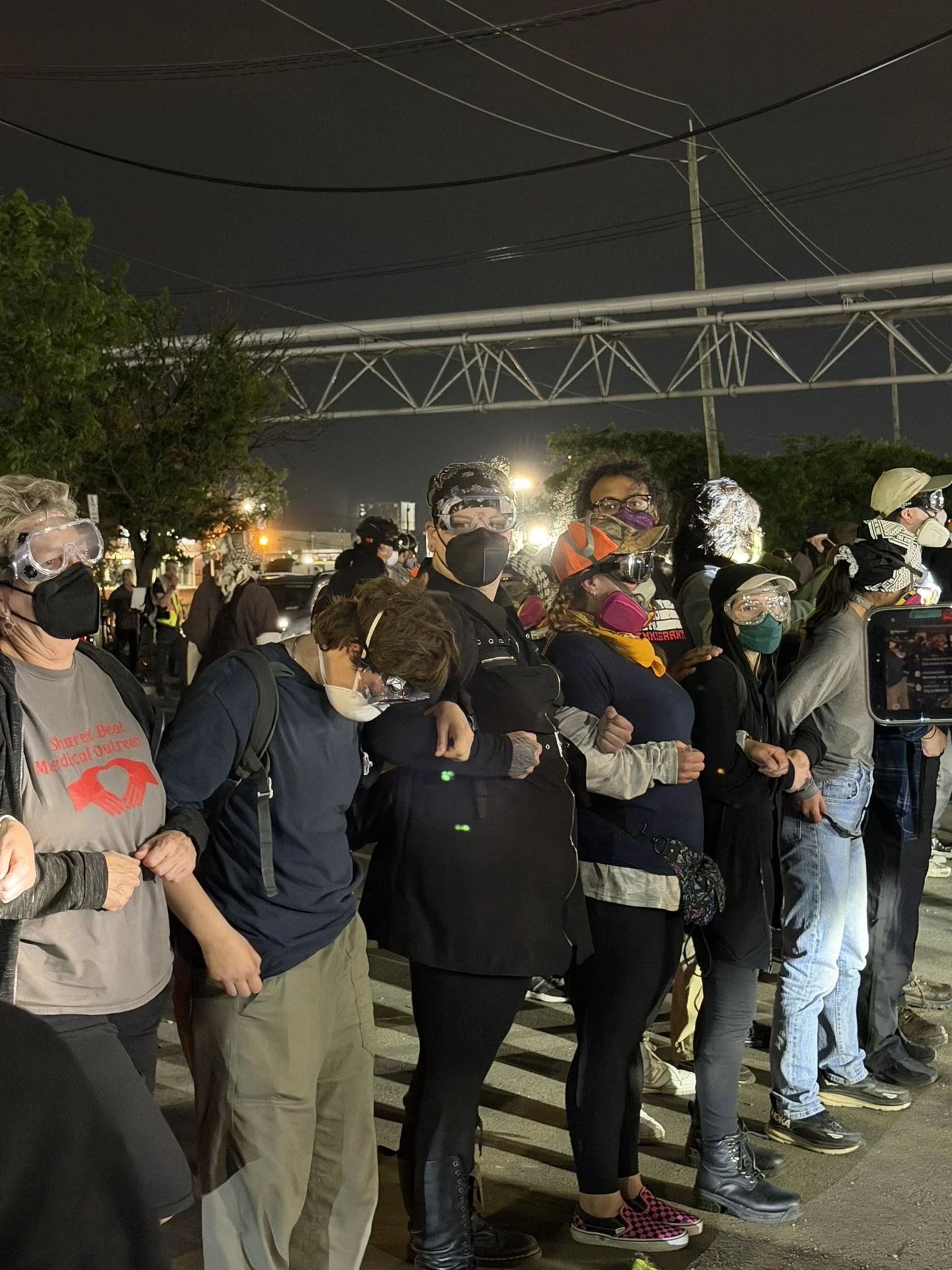
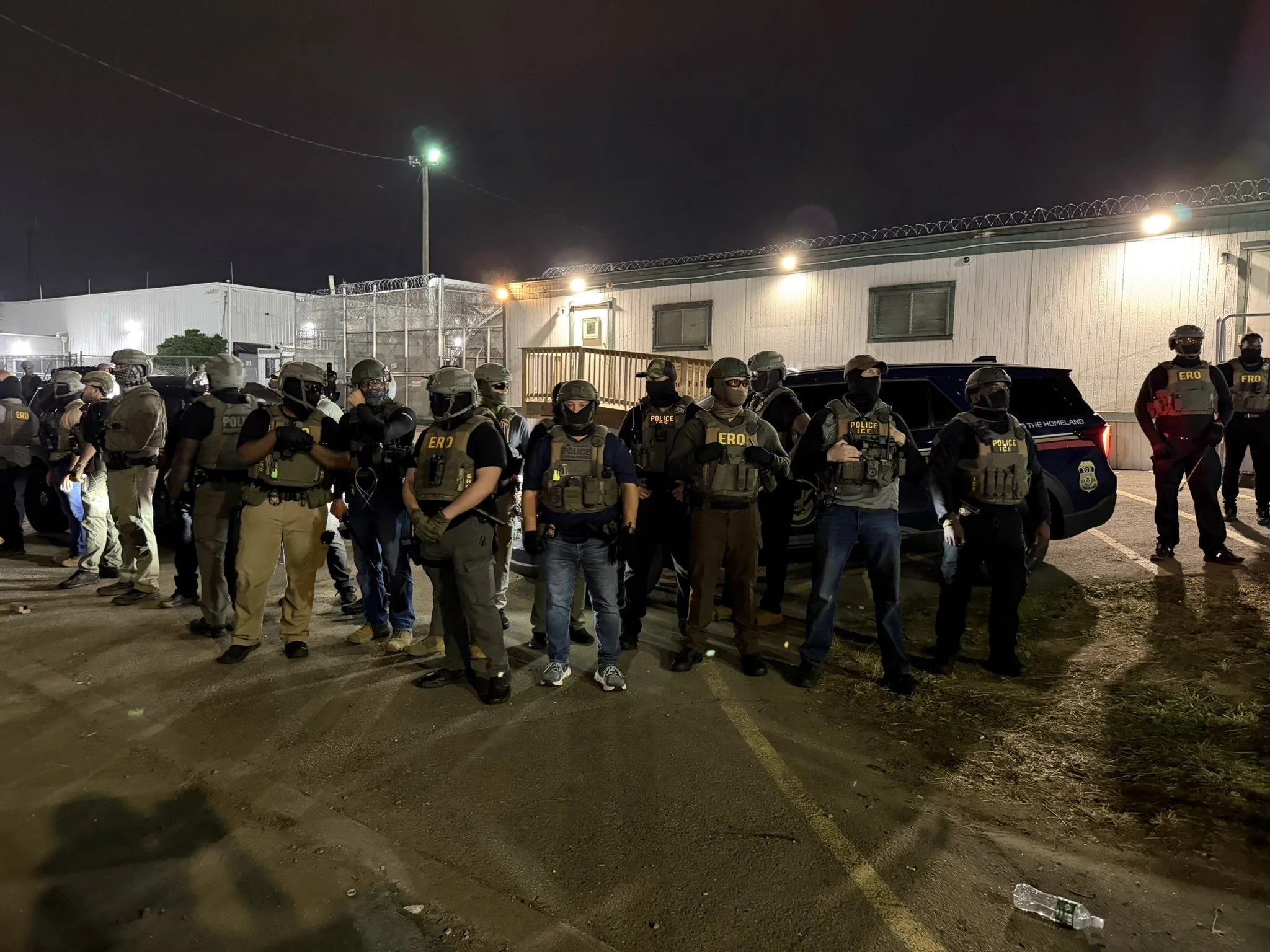
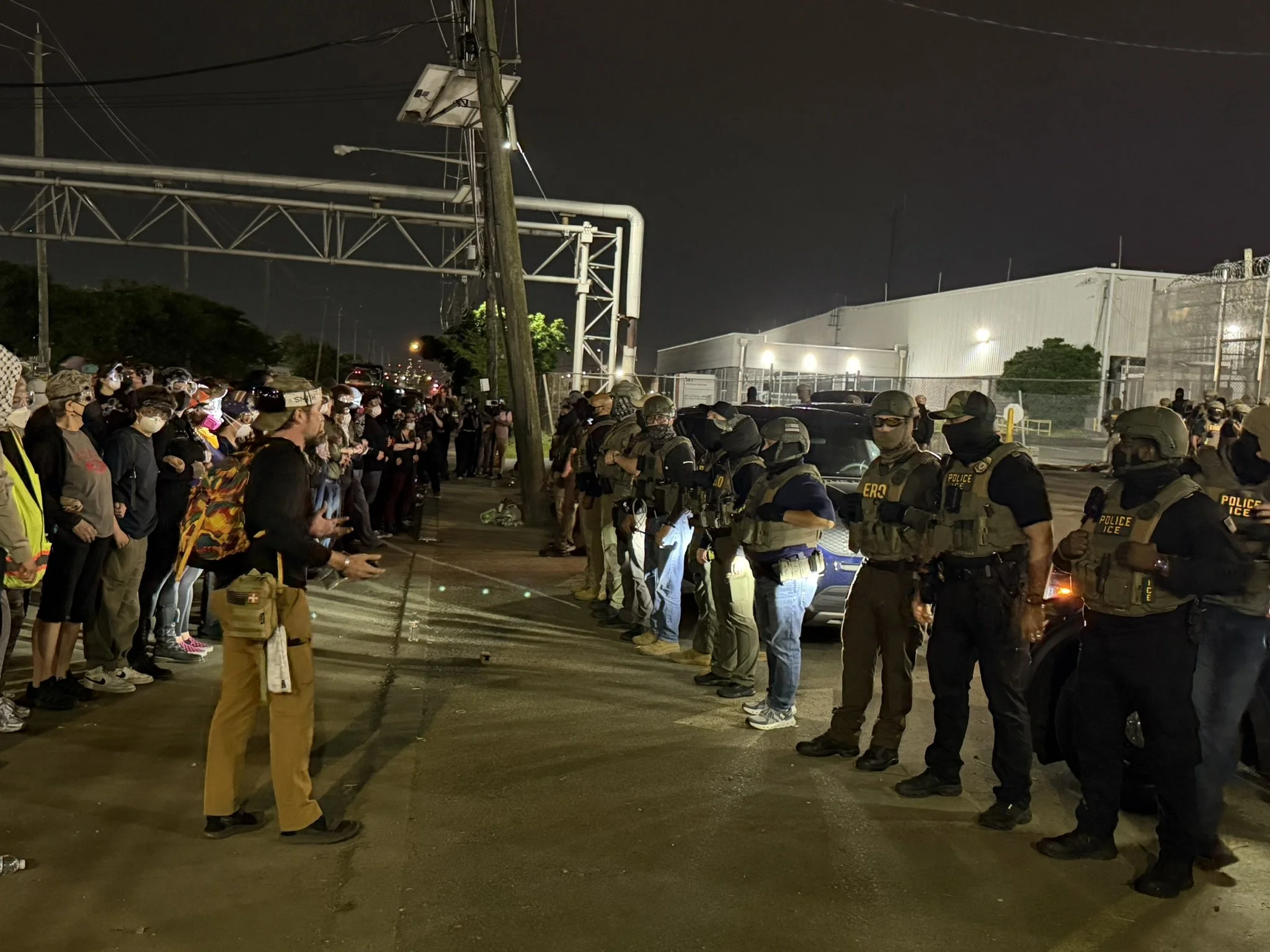
I looked around. I couldn't see anyone's face. Protesters stood in COVID-era masks, gas masks, black and white keffiyehs, and goggles sealed with duct tape. In front of them, ICE officers wore helmets, sunglasses, and face coverings. A volunteer walked toward me with a dozen donated goggles hanging from her arms and offered me a pair. I thanked her and naively stuck them in the side of my bag.
I spoke with a volunteer of Eyes On ICE, a community organization providing migrant support and demanding the abolition of ICE. I asked about the piles of medical supplies, goggles, masks, and cases of water. Community members had been dropping things off for days.
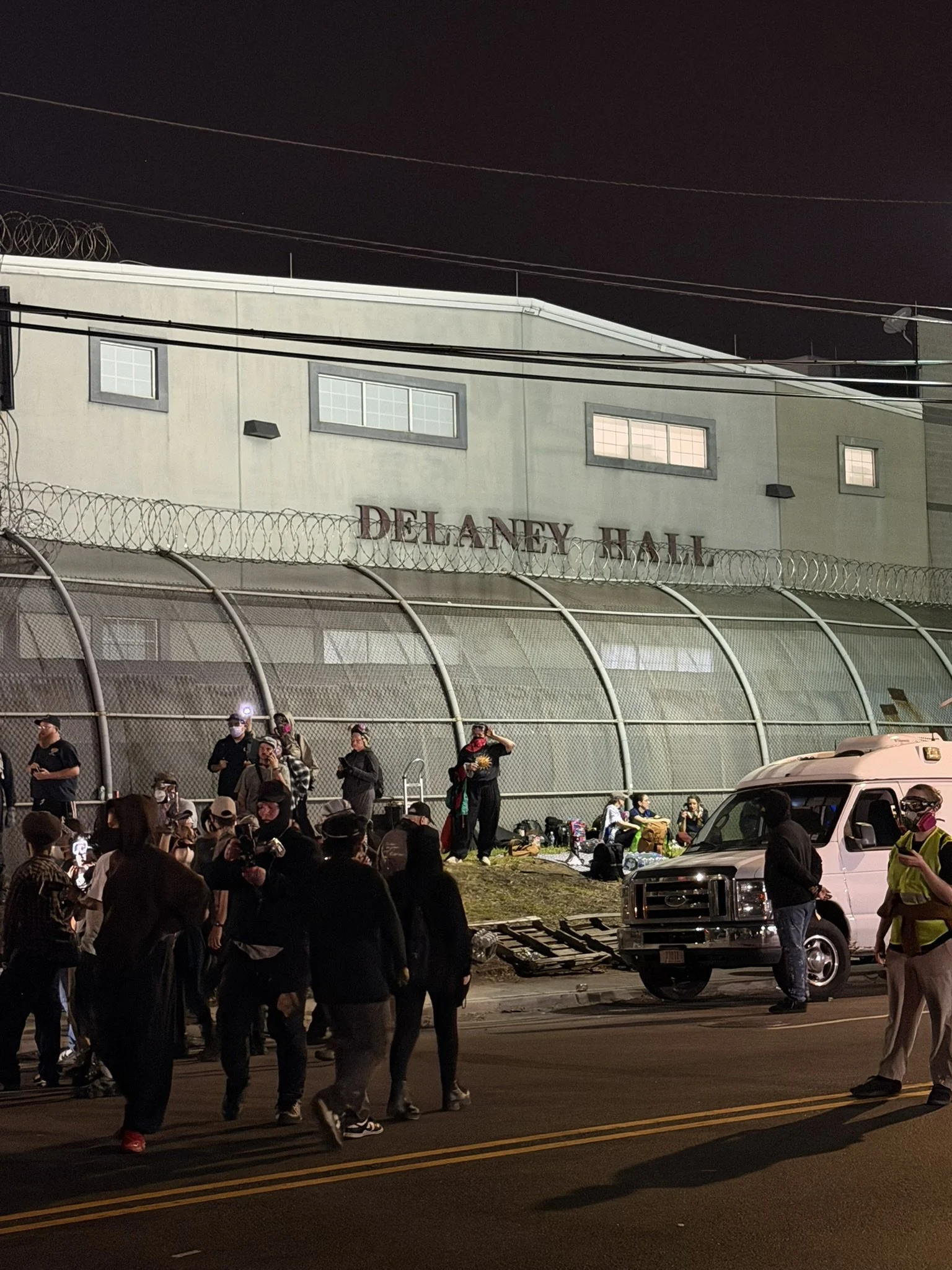
I arrived at Delaney Hall at 9 p.m. on the 5th night of a labor and hunger strike. Delaney Hall, a migrant detention facility, was reopened in 2025. ICE officials described Delaney as a facility that would help “arrest, detain, and remove illegal aliens from our communities.”
Poor conditions drove migrants in Delaney Hall to strike, drawing protests and media attention. Protesters demanded better conditions and that elected officials be allowed inside to conduct inspections. The migrants inside wrote a letter describing the lack of proper medical attention and food. The letter stated, “We feel vulnerable and, in a way, kidnapped-detained without justification-not to mention that we are being tortured physically and psychologically due to the poor food resources provided in these detention centers.” The letter was signed by more than 300 migrants inside the facility.
Outside of the facility, protesters stood arm in arm, chanting toward the windows where outlines of migrants had been seen the previous evening.
“We see you. We love you. Te amo.”
—
Doremus Avenue, a two-lane road, shrank to one. Protesters filled one side, facing off with ICE officers on the sidewalk. A handful of yellow-vested volunteers directed the traffic of large semi-trucks that came speeding behind the crowd.
“Behind the yellow line, please,” one volunteer shouted. “We don’t want you to get hurt or run over.”
As I moved behind the yellow line, sirens came screaming down the road. The crowd surged forward. Photographers were running toward the front to snap pictures of the vehicles speeding into Delaney Hall. ICE officers moved toward the protesters in unison, pushing them back to clear the entrance. Within seconds, the direction changed. ICE officers retreated to their original positions as protesters yelled toward them, “Move back! Move back! Move back!”
I paced around to the other side of the crowd, taking photos. After only five minutes, protesters abruptly tightened their arms together and shouted, “Hold the line! Hold the line!”
As another ICE vehicle drove toward the entrance, ICE officers started to push forward, trying to clear the line of protesters out of the way. Protesters rushed over, pushing the backs of those in front of them, reinforcing their stance. At once, the line to my left broke, and protesters ran to the other side of the street. A cloud of pepper spray drifted through the air behind them.
As I ran toward the crowd, I pulled my sweater across my face, but the pepper spray filled my lungs. A fit of coughing pushed me back with the crowd. I removed the goggles from my bag and secured them to my face.
The street was filled with coughs and screams.
“Water! Water! Water!”
As I made my way toward the tents to look for a mask, dozens of protesters ran back and forth with cases of water to help those who had been pepper-sprayed in the eyes.
After only two minutes, with my face properly covered, I returned to two lines that looked as if they hadn't moved. The line of protesters stomped their feet in defiance, yelling, “Free them all!”
—
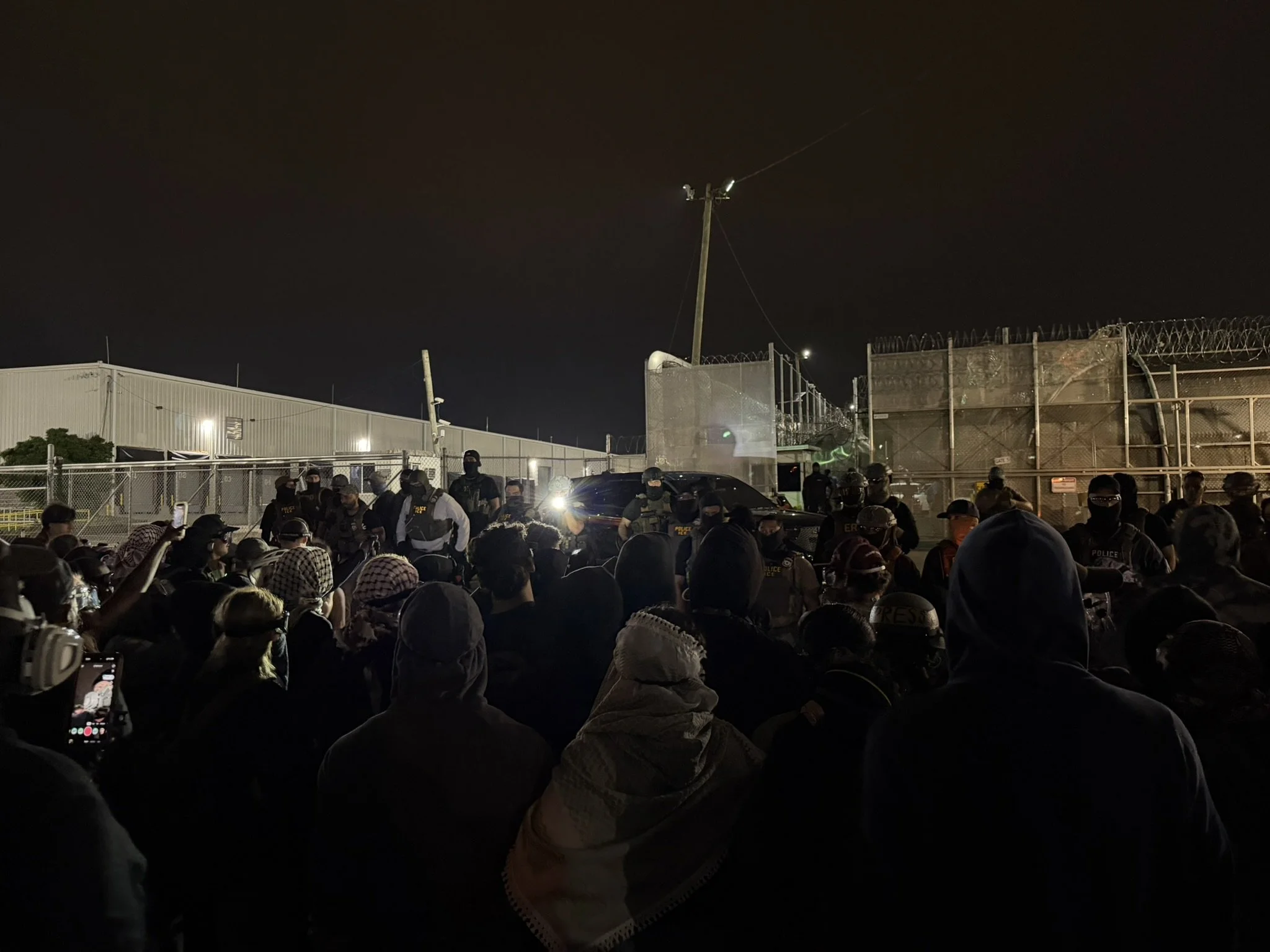
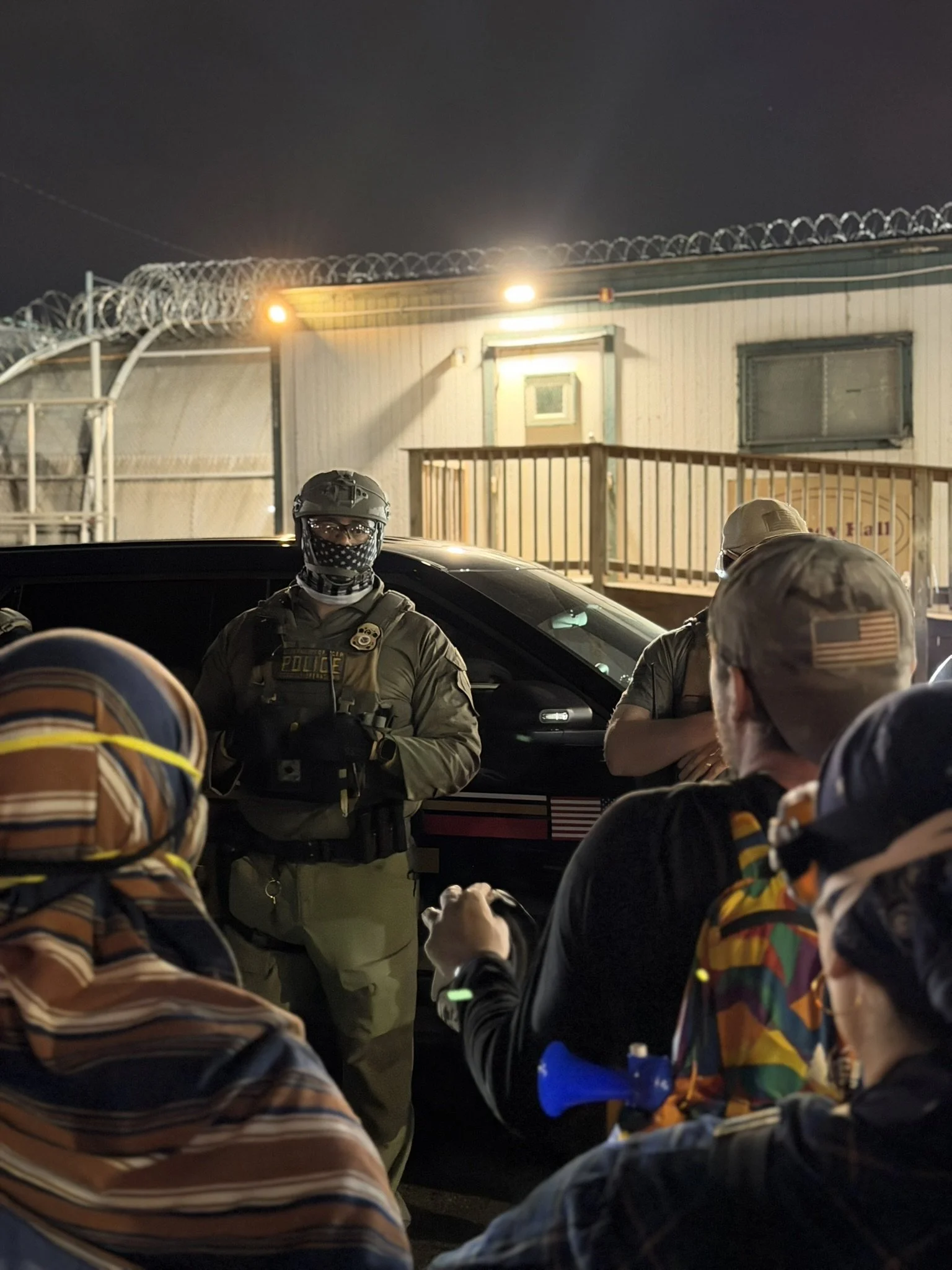
Protesters shouted louder and louder, “Quit your job or kill yourselves!” Then the main gate slid open. The crowd fell silent.
Gaps opened in the line as several officers advanced into the crowd. Baton drawn, an unmasked officer pressed a protester backward as a water bottle flew overhead. The protesters held their position. That was until another ICE officer stepped forward, yelling, “You’re gonna get sprayed! Back the fuck up!”
Protesters dropped their heads and covered their faces as a cloud of pepper spray drifted through the crowd. To my right, an officer chased a protester through the crowd, whipping a baton at his legs.
As I recorded a protester yelling, “Fuck you fascist scum!” I was distracted by a loud dragging noise. I looked down. A man was kneeling. Before I could register what was happening, he launched a wooden plank over his head, directly at an exiting ICE vehicle. I stepped back in shock, but I was the only one.
Protesters dumped trash bags full of empty water bottles into the street. ICE vehicles raced down the road. I raised my phone and pushed forward. At the same time, an officer broke from the line, yelling, “Get the fuck back! Let’s go!” The photographer in front of me was pepper-sprayed. I could hear him yelling in pain behind me as the ICE officers retreated, taking the wooden plank with them.
—
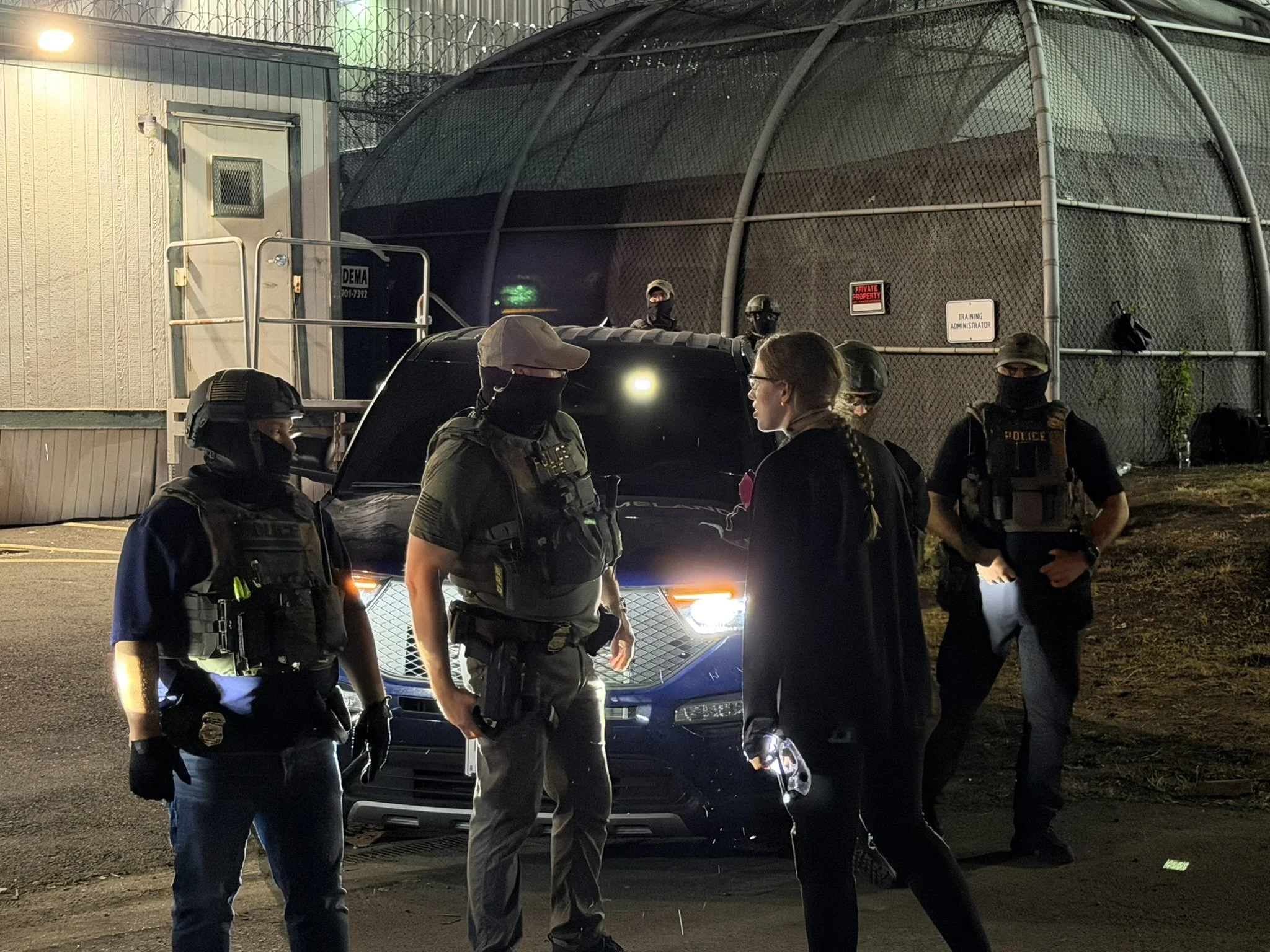
With the lines re-established, protesters began chanting again: “NO ICE, NO KKK, NO FASCIST USA!”
A young woman with a pink gas mask walked up to an ICE officer. She leaned in. I could hear her voice crack with anger as she yelled, but I couldn't make out her words. As I went closer, sirens erupted down the road. My heart raced. I scanned the lines, bracing for another push. Neither line moved.
An ambulance approached, and protesters moved out of the way. A few ICE officers escorted the ambulance inside. The gates opened, the ambulance entered, and the gates shut. As my mind flooded with questions, I heard, “Hey!”
I turned around to see the Eyes On ICE volunteer I talked to a few hours ago. She commented on my new attire, a pair of goggles and a mask, and I laughed. This was the first time in two hours I had a moment to process what was happening. I asked her about the ambulances, but she didn’t know why they were there.
As I told her about the last two hours, she nodded knowingly and asked if I had noticed the drones. I looked at her, stunned.
I thought I was beginning to understand the situation.
Then I looked up.
Above us, two white drones hovered overhead. One blinked red. The other blue.
—
A sudden commotion drew me back to the line. Protesters, arms locked, held their line, pushing against the ICE officers. I was stuck in the back, unable to get through. I heard screaming and realized someone was being dragged forward.
I stood on my tiptoes, but all I could see was a woman on the ground. I ducked between the protesters’ legs and squatted in front, straining to see her face. All I could see was the tattoo on her exposed back.
ICE officers stood over the woman while a gray vehicle drove toward the gate. As the car pulled through, I realized another protester was being carried through the gate.
Protesters chanted, “Let her go! Let her go! Let her go!”
An ICE officer shook a can of pepper spray in preparation.
They carried her by her limbs through the gate.
“They have taken our comrade!”
Two ICE officers laughed and appeared to mimic the motion of grabbing someone, although it was unclear which protester they were referring to. As the line of protesters watched this reenactment of what happened, a young woman’s voice cracked as she yelled, “Why are you hurting her? She didn't hurt you.”
I stood in front of the line of protesters, looking for any sign of the woman who was taken. I was jolted out of my confusion.
“Hey, bro, hey, bro with the stick.”
The man standing next to me leaned forward, pointing his finger in anger.
“You’re a fucking coward! You’re a fucking coward! We don’t got weapons, bro. Just beating innocent people with sticks like a fucking coward. Shame on you, you little fucking bitch.”
Flashlights shone through the crowd. One flashlight was strobing, and a man behind me said, “They are going to target somebody right now.” I wasn’t sure what he meant.
ICE officers started pointing into the crowd. One said, “Right in the back there.” Another answered, “Yellow gloves.”
That description echoed through the crowd as protesters started yelling for whoever was wearing yellow gloves to leave.
—
As midnight approached, I heard shouting behind me.
The yellow-vested volunteers who directed traffic were gone. The traffic was at a full stop. A line of semi-trucks blared their horns at three protesters arguing in the street.
Two protesters in all black refused to move. Another protester urged them to clear the road and let the trucks pass. They stood in defiance. The protester tried to push one of them aside.
“Don't touch me!”
“I’m on your side,” the protester pleaded. “Let them through.”
The shouting started to attract everyone’s attention. Cameras swarmed. A protester began pacing in front of the semi-trucks, refusing to move out of the way. As people began to push and shove each other, a photographer tried to intervene, saying, “There is media cameras on you. You don’t want this image.”
After hours of adrenaline, anger, and fear, the camaraderie started to break down. I looked at the line of ICE officers, still in the same position, and one pointed, “Look, they are fighting each other.”
The comment was met with a few snickers and headshakes.
—
“Get back! Get back!”
As the line pushed toward me, I realized the line of semi-trucks had not moved, and there was nowhere for us to go.
A protester in a yellow gas mask was pushed back and struck in the leg with a baton. The ICE officer next to him extended his arm in front of his baton. Another vehicle sped behind them, entering the facility.
As the officers started to pull back, a protester yelled, “Back up! Fuck you!” An ICE officer walked over with a bright yellow taser gun, tilting his head to the side.
Water sprayed overhead and struck an officer. He sprinted directly to my left. Wielding a baton, he whipped at the leg of a protester who appeared to have sprayed him with a water bottle.
Another protester was suddenly in front of me. They were pushing a blue shield against an officer. The ICE officer kicked at the shield, his foot landing on their thigh. He fell forward, pinning the protester against a semi-truck.
As people screamed in horror, I lost track of the protester with the blue shield. Later that night, as I reviewed my footage, I realized the back wheel of the semi had rolled over their leg.
I saw the woman with the pink gas mask. She shoved an officer’s arm away from another protester. Another ICE officer came from behind and grabbed her.
—
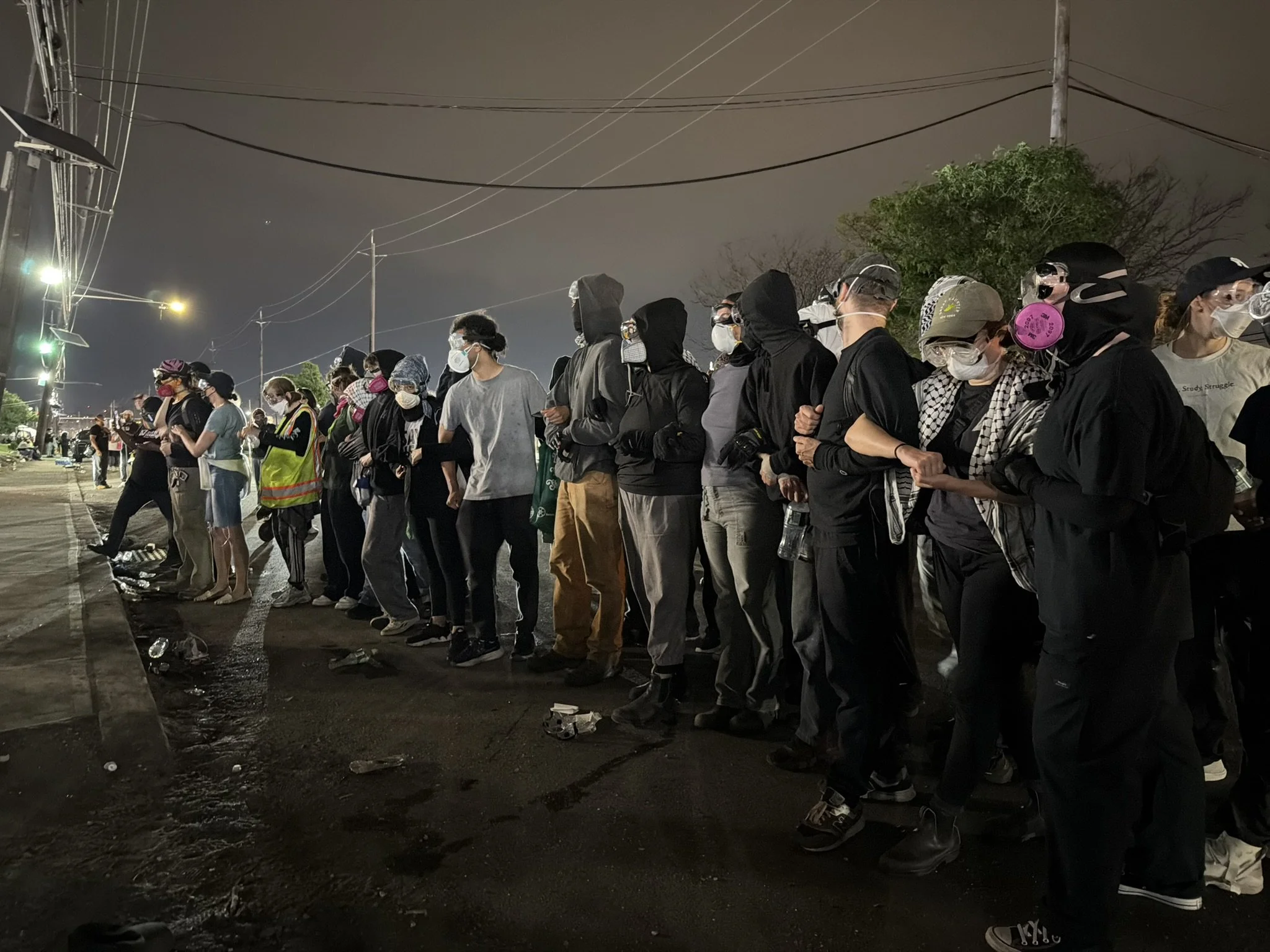
As 2 a.m. approached, about 15 protesters remained. The standoff continued. A line of protesters stood in front of a line of ICE officers, just as they had five hours earlier. As the numbers dwindled, ICE vehicles entered and exited Delaney Hall without resistance.
As I sat on the curb, watching the vehicles move freely, I realized that protesters had pushed against ICE officers for five hours, trying to prevent the movement of vehicles. They did not stop a single car.
A sudden eruption of cheers pulled my attention back to the building. The lights inside Delaney Hall were flickering.
And that's when I realized: the night wasn’t about the ICE vehicles. It was about the noise.
Every pepper-spray-soaked cough, every whip of a baton against a shield, every push of the line, every scream could be heard inside. The people inside knew they had not been forgotten.
“We see you. We love you. Te amo.”
